Tonalisme
7 œuvres
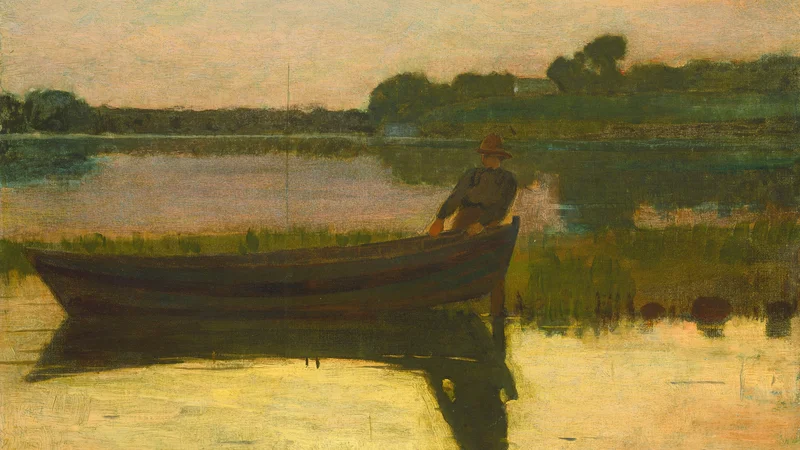
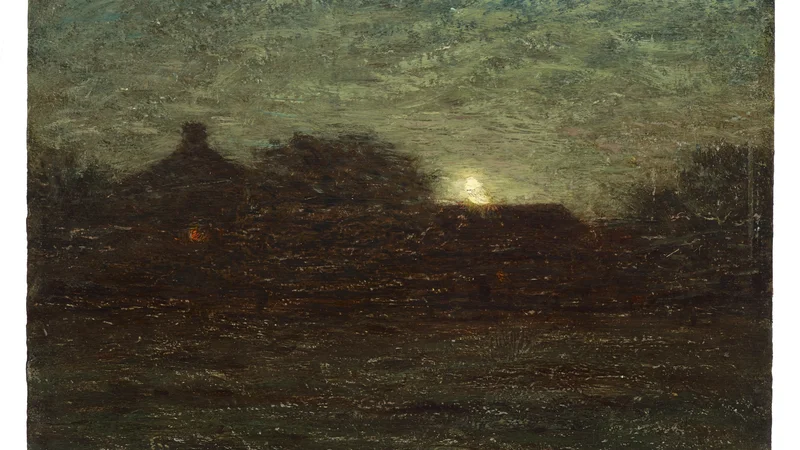
Le tonalisme a émergé aux États-Unis à la fin du XIXe siècle comme une rupture méditative face à la clarté incisive de la Hudson River School, privilégiant une interprétation poétique du paysage à travers des palettes atténuées et une profondeur atmosphérique. En donnant la priorité à l'orchestration des harmonies colorées et au flou des formes, les artistes cherchaient à évoquer l'humeur et l'ombre plutôt qu'une simple description topographique. Cette philosophie esthétique, qui a prospéré approximativement entre 1880 et 1915, a trouvé une expression profonde dans les œuvres de Dwight Tryon, dont Sunset et Moonrise capturent l'immobilité évocatrice et floue au cœur de l'éthique du mouvement.
La polyvalence du mouvement s'est étendue au-delà des paysages pastoraux vers le domaine de l'observation urbaine et de l'illustration, comme en témoignent les rendus atmosphériques de Francis Hopkinson Smith. Son travail dans des volumes tels que In Dickens' London, incluant des études comme St. Paul's Church et Covent Garden, illustre comment les principes tonalistes—spécifiquement la manipulation de la lumière et des textures en voile—pouvaient articuler le caractère mélancolique des sites historiques. Alors que des figures comme Winslow Homer opéraient au sein de leurs propres orbites distinctes, l'impulsion tonaliste plus large a profondément influencé la trajectoire ultérieure du modernisme américain. En mettant l'accent sur l'expérience subjective plutôt que sur la documentation littérale, le tonalisme a fondamentalement altéré le vocabulaire visuel américain, laissant un héritage d'art introspectif et évocateur qui demeure une pierre angulaire de l'érudition de la fin du XIXe siècle.