Alte Nationalgalerie
11 artworks
Situated on the historic Museum Island in Berlin, the Alte Nationalgalerie stands as a monumental achievement of 19th-century architecture. Commissioned by King Frederick William IV of Prussia and realized between 1862 and 1876 under the architectural guidance of Friedrich August Stüler and Johann Heinrich Strack, the building serves as a definitive synthesis of Neoclassical and Renaissance Revival styles. Its facade, punctuated by a formal memorial to the King, establishes a grand portal to the cultural heritage of the German capital, eventually earning the site its status as a UNESCO World Heritage landmark in 1999 for its profound contribution to the evolution of the gallery as a public institution.
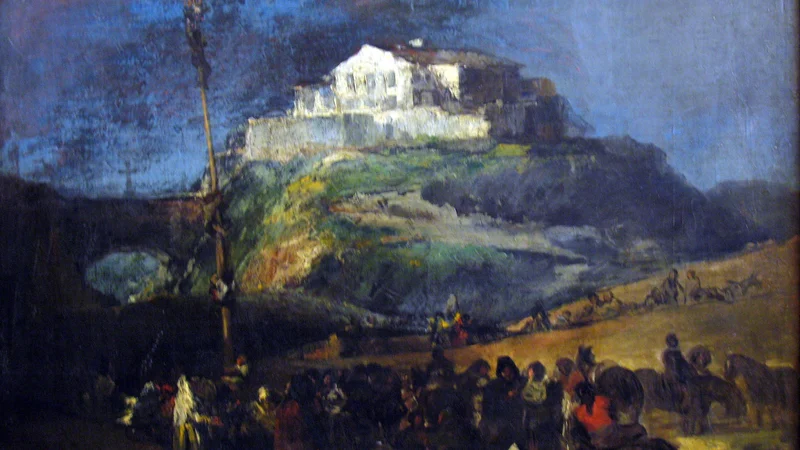
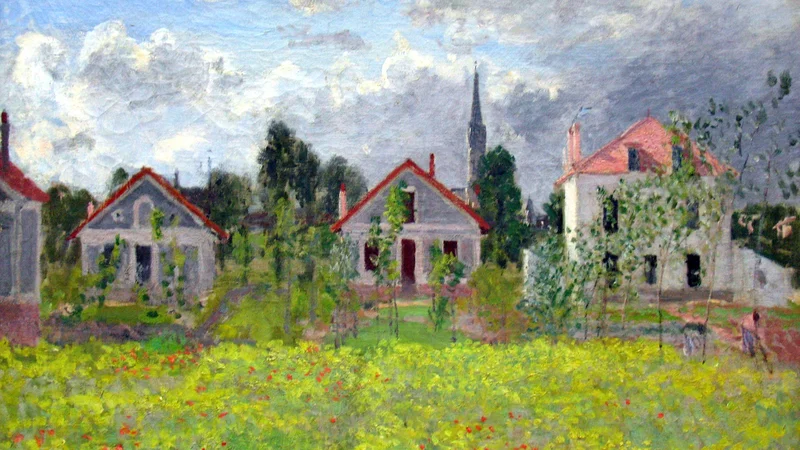
The gallery’s extensive holdings offer a rigorous survey of artistic development throughout the 19th century, bridging the emotional depths of Romanticism with the luminous innovations of Impressionism and Post-Impressionism. Visitors encounter a sophisticated dialogue between masters such as Karl Friedrich Schinkel, whose Medieval City on a River captures the era's architectural romanticism, and the revolutionary perspectives of Francisco Goya. The collection is particularly distinguished by its French holdings, featuring seminal works such as Claude Monet’s Houses at Argenteuil and St. Germain l'Auxerrois, alongside the structured chromatic brilliance of Paul Cezanne’s Mill on the Couleuvre at Pontoise. These canvases, paired with evocative pieces like The Maypole and Summer, illustrate the shift from academic tradition to the modern aesthetic sensibility.
Today, the Alte Nationalgalerie remains an essential site for the study of European art history, functioning as a nexus where the aesthetic traditions of the past are preserved for contemporary discourse. By providing a permanent home for these transformative works, the institution facilitates a deeper understanding of the cultural shifts that defined the 19th century. Its enduring reputation as a premier scholarly sanctuary reflects its unique capacity to contextualize the artistic milestones that shaped the modern visual experience.
Background adapted from Wikipedia (CC BY-SA).