Pre-Raphaelitism
5 artworks
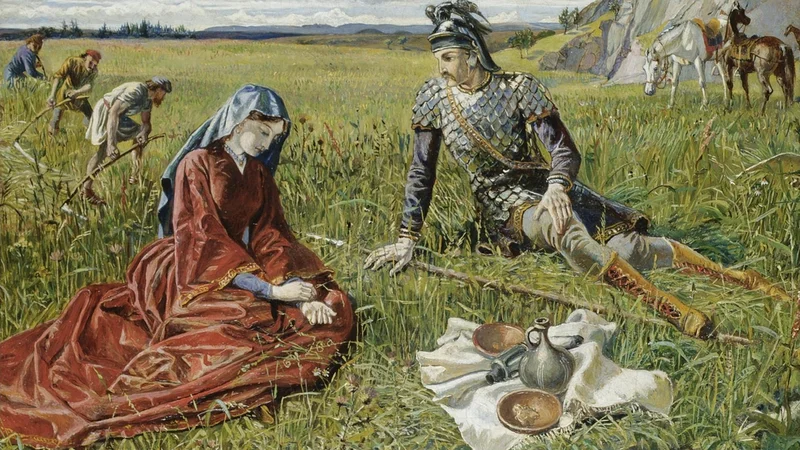
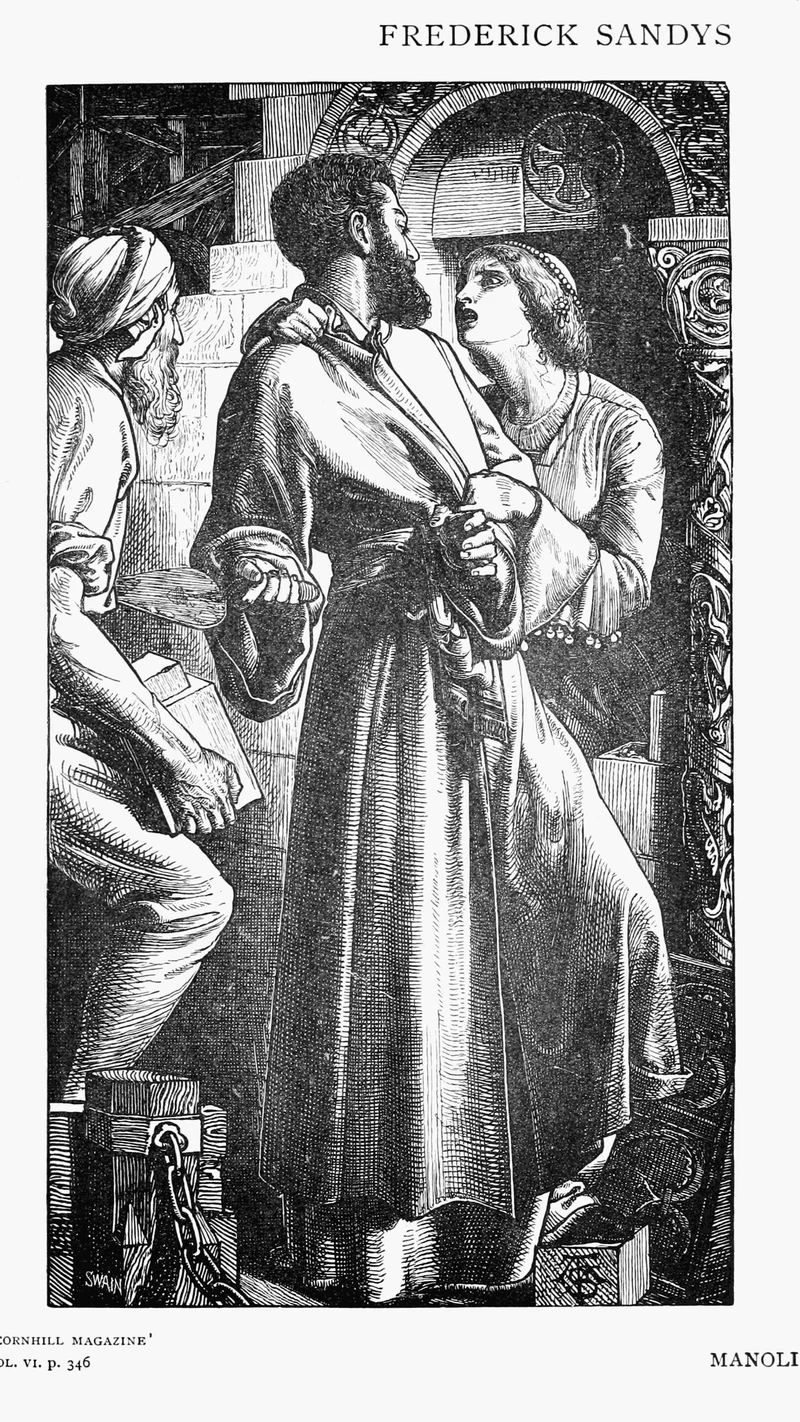
Emerging in mid-19th-century Britain, Pre-Raphaelitism originated as a radical rejection of the rigid academic conventions codified by the Royal Academy, which favored the polished, balanced compositions popularized by Raphael. The movement sought to recapture the sincerity, intense color, and detailed naturalism characteristic of Italian art prior to the High Renaissance. By prioritizing minute attention to botanical accuracy and complex literary symbolism, practitioners established a visual language that merged moral earnestness with a highly decorative sensibility. Key figures such as Arthur Hughes and Frederick Sandys exemplified this dedication, particularly through works like Ruth and Boaz and Dark Thoughts, which utilized rich textures and psychological depth to elevate the narrative potential of the canvas.
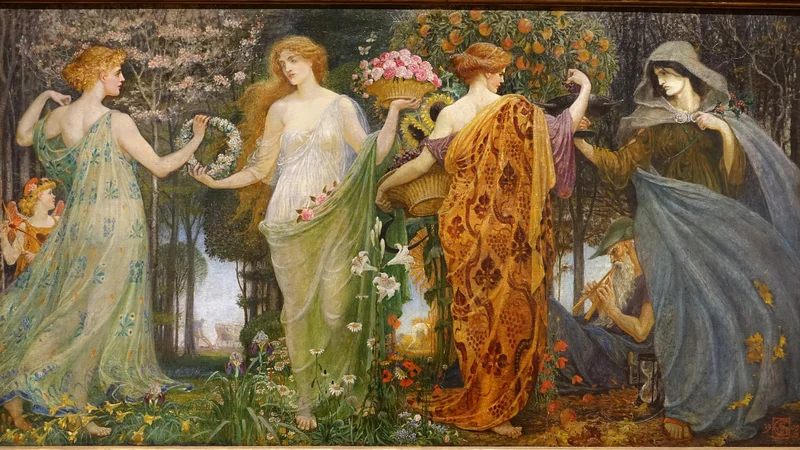
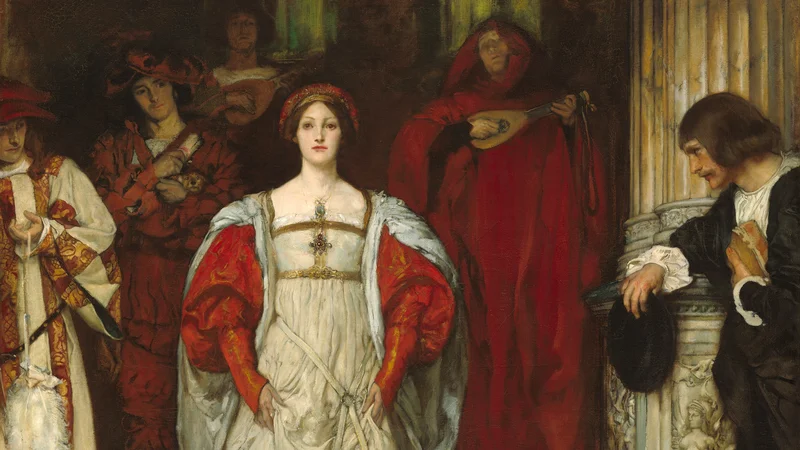
As the movement matured, its influence expanded into the decorative arts and illustration, where artists like Walter Crane and Edwin Abbey further refined the aesthetic toward a synthesis of poetry and design. Works such as A Masque for the Four Seasons and Who Is Sylvia? What Is She, That All the Swains Commend Her? demonstrate the fluid transition between painting and graphic narrative, often drawing upon classical and folkloric motifs. The legacy of the Pre-Raphaelites resides in their commitment to artistic integrity and their role in bridging the gap between historical romanticism and the decorative innovations of the Arts and Crafts movement. By demanding a return to the direct observation of nature and the profound resonance of the literary canon, the movement profoundly shaped the trajectory of modern aesthetic thought.