Eugène Boudin
5 artworks
Eugène Boudin (1824–1898) was a French landscape painter whose work served as a critical bridge between the mid-nineteenth-century Barbizon school and the emergent Impressionism. Born in Honfleur, Boudin honed his skills through the rigorous observation of the coastal light and atmospheric conditions of Normandy. His early training and consistent focus on capturing the transient effects of weather and sea placed him at the forefront of the plein-air tradition, ultimately influencing a generation of painters, most notably his protégé, Claude Monet.
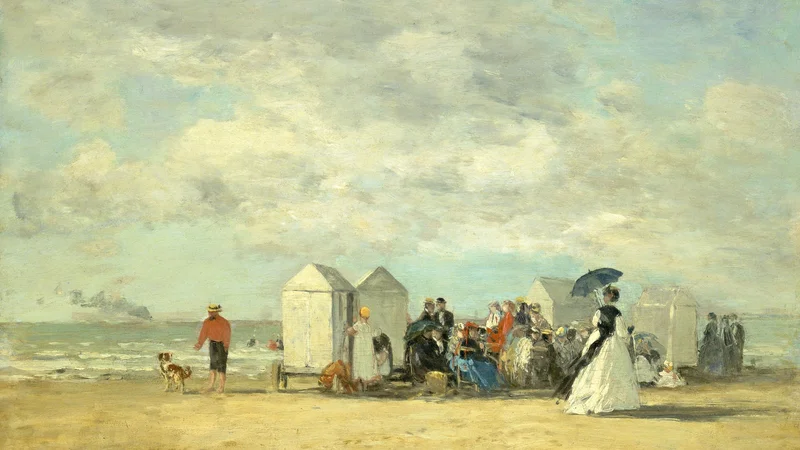
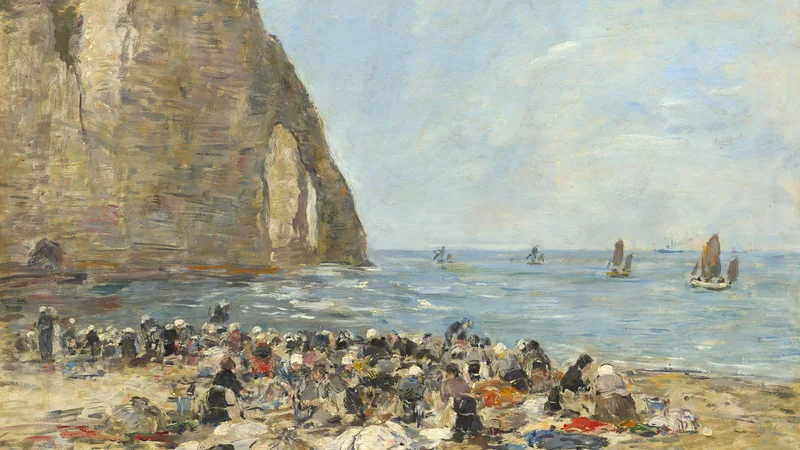
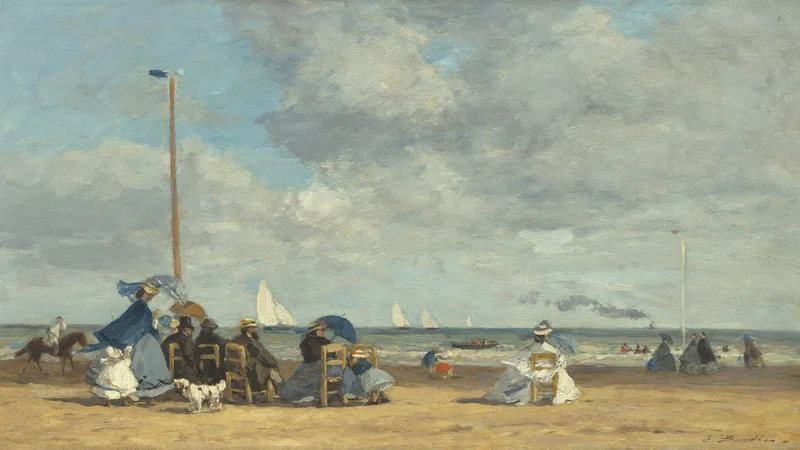
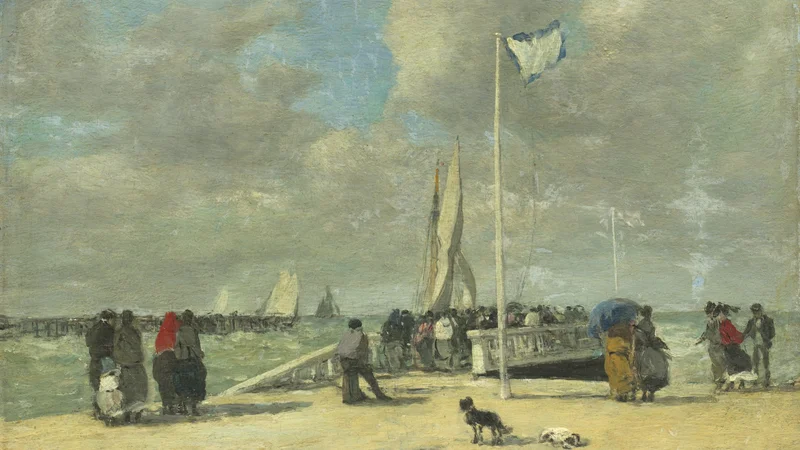
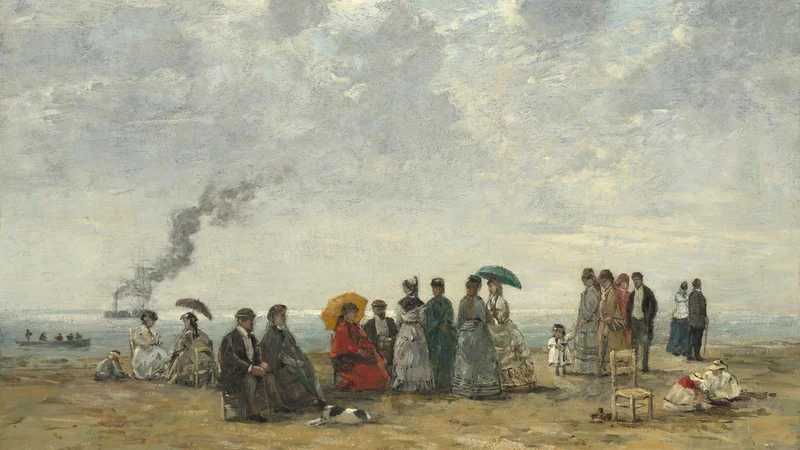
Boudin’s technique was characterized by a lightness of touch and an acute sensitivity to color that allowed him to render the expansive, shifting skies of the Channel coast with remarkable precision. Throughout his active periods in the 1860s, he frequently turned his attention to the leisure activities of the fashionable bourgeoisie, as evidenced in Beach Scene and Beach at Trouville. His compositions often emphasized the horizontal expanse of the shoreline, seen in works like On the Jetty and Figures on the Beach, while his interest in the rhythmic labor of local inhabitants remained a consistent subject, exemplified by Washerwomen on the Beach of Etretat. These scenes provide a nuanced record of societal change alongside his primary preoccupation with natural light.
By capturing the ephemeral quality of the French coast, Boudin established a visual language that prioritized the subjective experience of the landscape over rigid academic structure. His dedication to immediate, direct observation provided the foundational methodology for the Impressionists. His legacy endures not only through his prolific output but through his pivotal role in shifting the artistic focus toward the spontaneity of the moment, effectively anticipating the modern pursuit of capturing light as the primary subject of the canvas.