Jean-Auguste-Dominique Ingres
13 artworks
Jean-Auguste-Dominique Ingres was a preeminent French painter of the 19th century and the principal successor to the Neo-classicism established by Jacques-Louis David. Born in Montauban, he received his foundational training under David before moving to Rome, where he developed a lifelong commitment to the clarity of line and the pursuit of ideal form. Throughout his career, which reached significant milestones in 1817, 1827, and 1830, Ingres positioned himself as a staunch defender of academic tradition, emphasizing the supremacy of drawing over the emotive color palettes favored by his Romantic contemporaries.
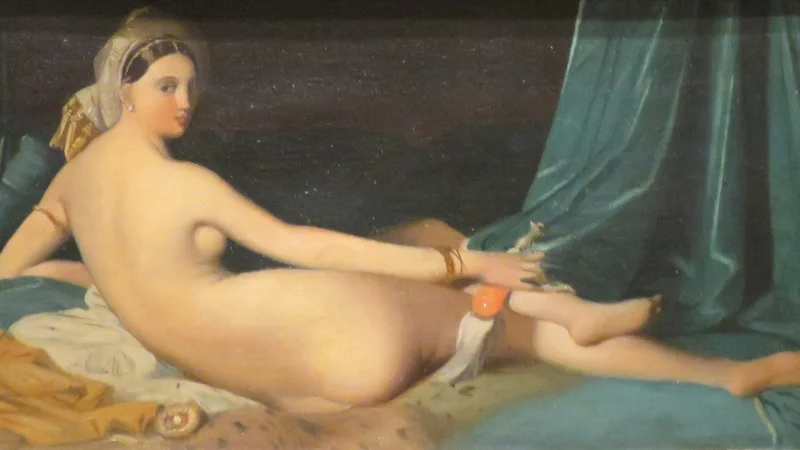
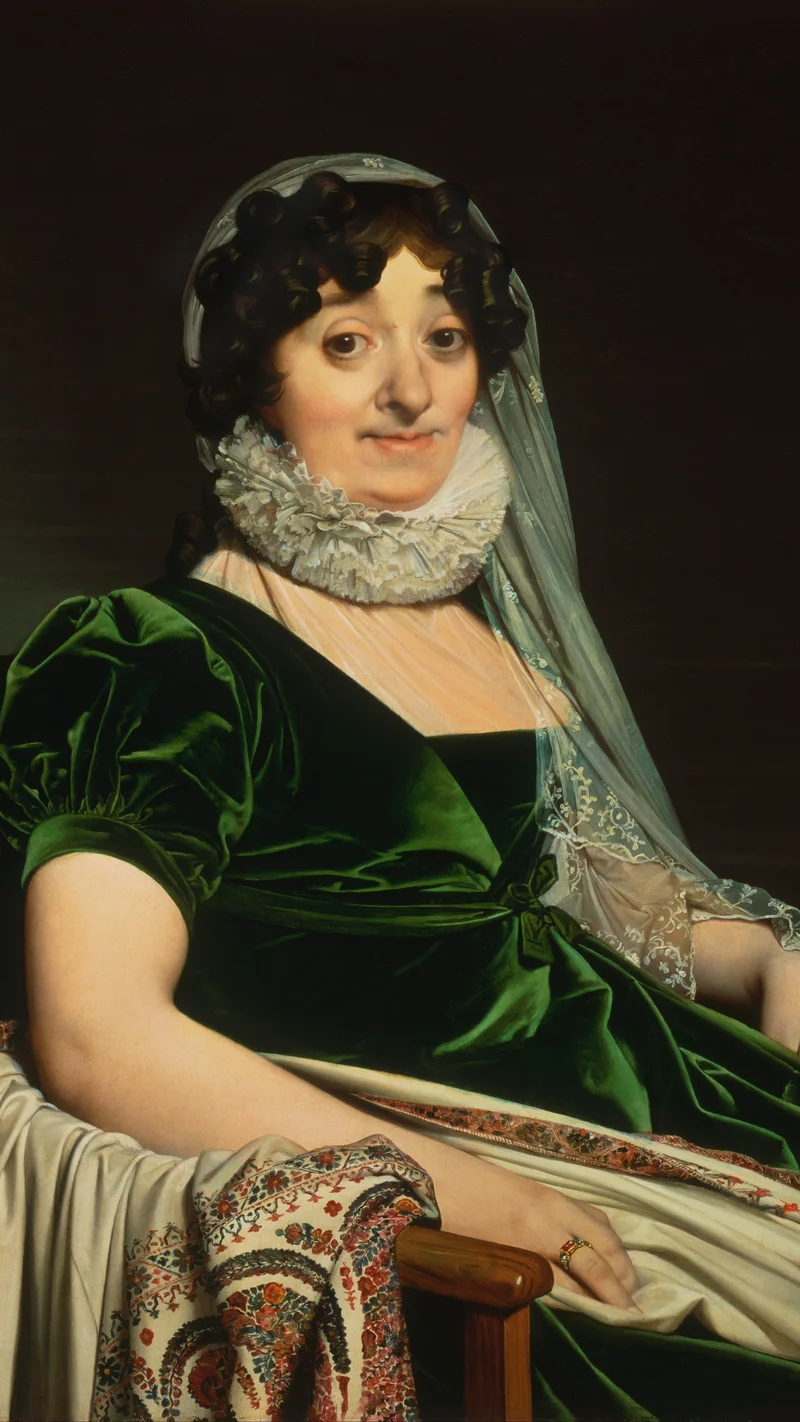
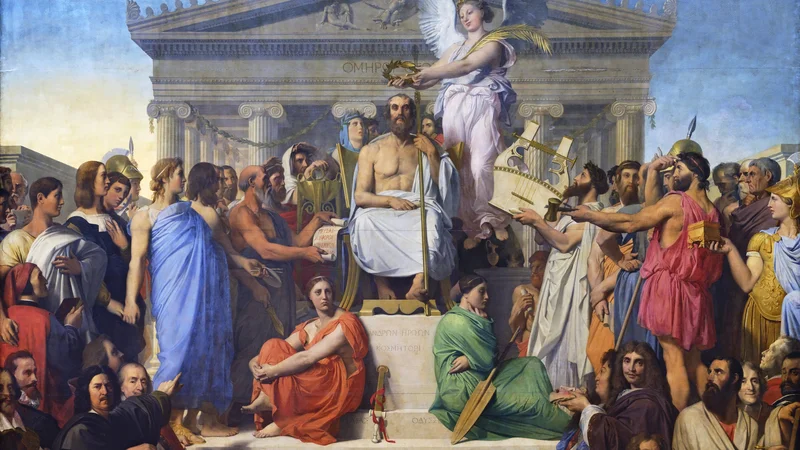
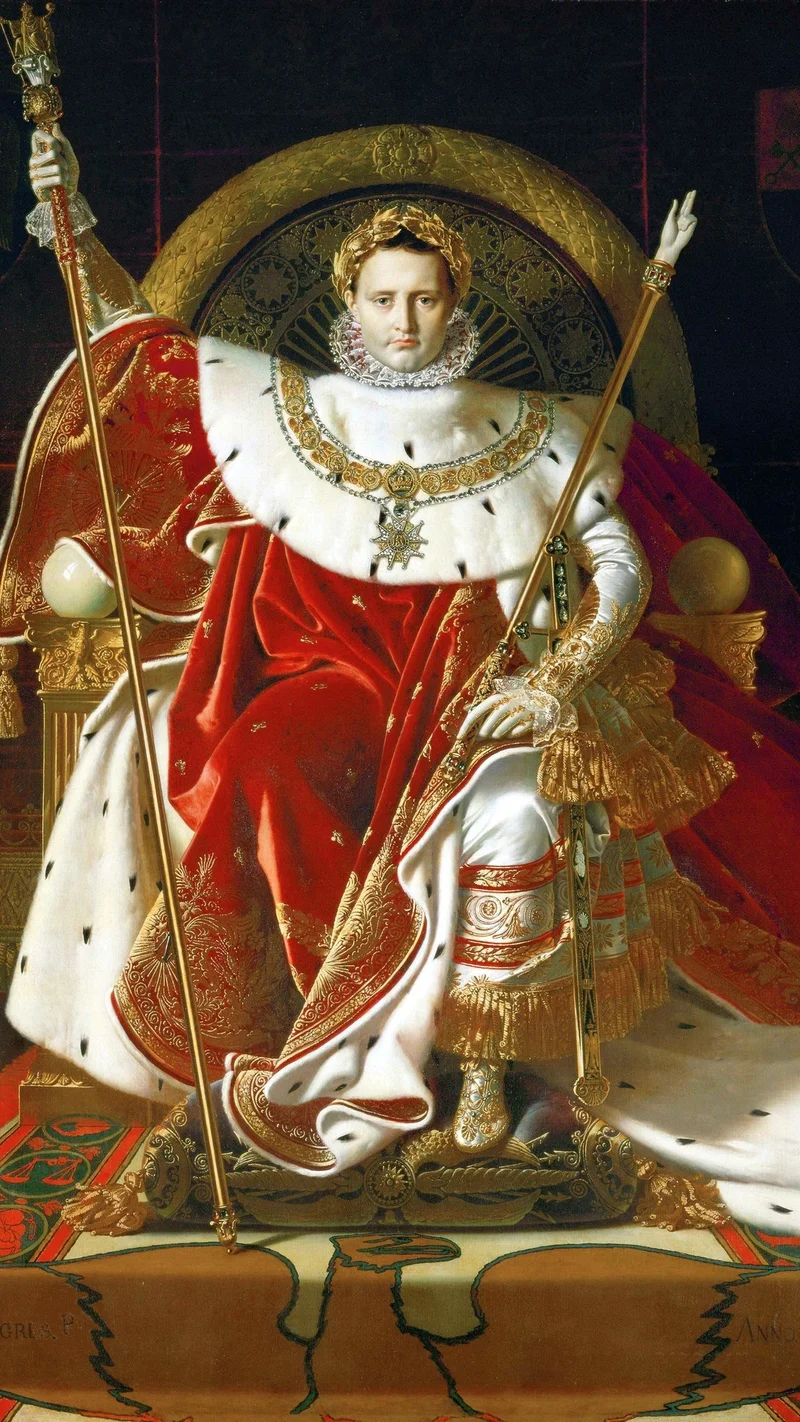
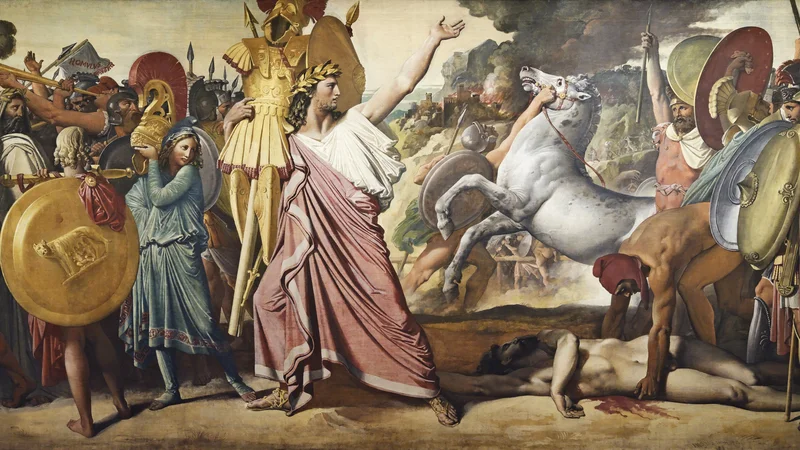
His technical approach was characterized by a meticulous, sculptural precision and a rhythmic, often elongated manipulation of the human figure. This is evident in the sinuous grace of his Odalisque and the intricate, heraldic detailing of Napoleon I on his Imperial Throne. His compositions, ranging from the complex historical narrative of The Apotheosis of Homer and the courtly precision of Henry IV Receiving the Spanish Ambassador to the sensitive character study in the Portrait of the Countess of Tournon and the dramatic sentiment of The Death of Leonardo da Vinci, consistently reflect a sophisticated command of visual structure. Ingres employed smooth surfaces and crisp contours to achieve a timeless, almost detached elegance.
Ingres remains a pivotal figure in art history, serving as a bridge between the rigorous standards of the Academy and the evolving modern aesthetic. His unwavering dedication to draughtsmanship influenced generations of subsequent artists, ensuring that his synthesis of classical order and idiosyncratic formal beauty remains central to the study of Western art. By prioritizing the structural integrity of the image, he cemented his legacy as a master whose work continues to inform the discourse on figurative composition.