Jean-Michel Basquiat
5 artworks
Jean-Michel Basquiat (1960–1988) was an American artist whose rapid ascent to prominence in the early 1980s marked a pivotal moment in contemporary art history. Emerging from the underground graffiti culture of New York City, Basquiat transitioned to canvas to become a central figure of the Neo-Expressionism movement. His work, characterized by a sophisticated visual language, synthesized disparate elements of history, music, and social critique, bridging the gap between street-level immediacy and the institutional framework of fine art during his most prolific active years between 1981 and 1983.
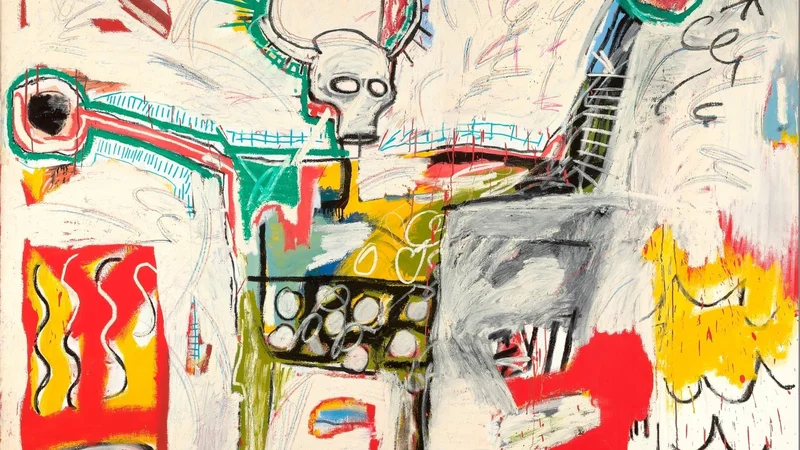
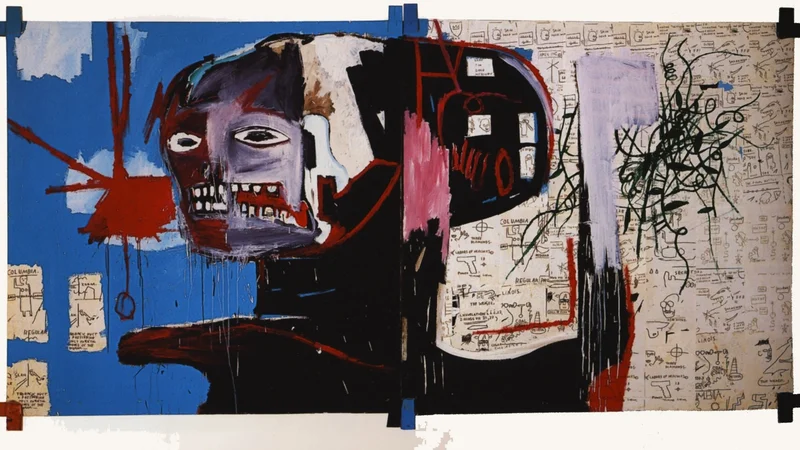
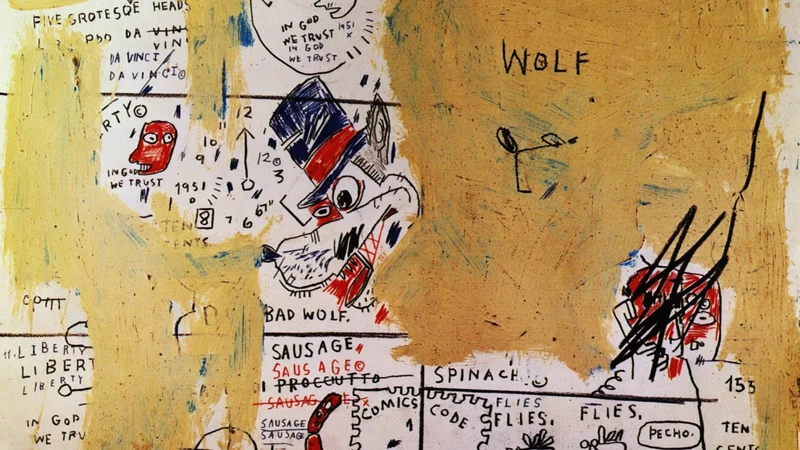
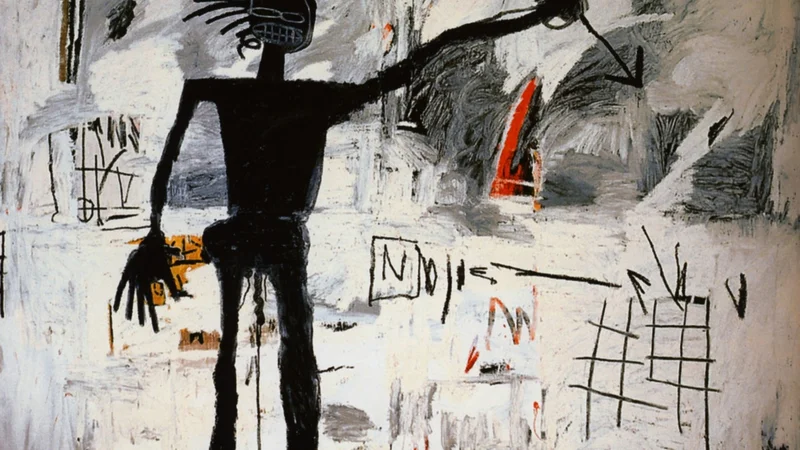
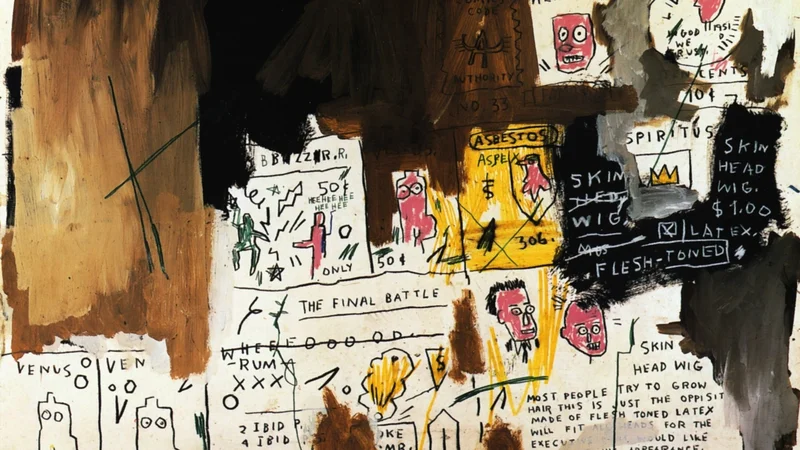
Basquiat’s technique was defined by a frantic, rhythmic application of paint, oil stick, and mixed media that prioritized raw gesture over academic finish. His compositions are often crowded with scrawled text, anatomical diagrams, and mask-like figures that interrogate power and identity. This aesthetic is evidenced in works such as Untitled, Wolf Sausage, and Skin Head Wig, where the layered textures reflect a chaotic yet deliberate structural density. In pieces like La Colomba and his various iterations of Self-Portrait, Basquiat utilized bold chromatic contrasts and fractured silhouettes to create a psychological tension that commands the viewer’s attention, effectively dismantling traditional hierarchies of subject matter.
His lasting influence lies in the profound way he challenged the Eurocentric canon by integrating African diaspora narratives and systemic critiques into the global art lexicon. By deconstructing and reassembling historical tropes through a lens of existential urgency, Basquiat secured his position as an essential cultural historian of the late twentieth century. His ability to distill complex sociological tensions into visceral, rhythmic compositions continues to inform the trajectory of modern figurative painting.