Thomas Cole
9 artworks
Thomas Cole (1801–1848) was an Anglo-American painter and the preeminent figure of the Hudson River School, a group of artists who defined the American landscape tradition during the nineteenth century. Born in England, Cole immigrated to the United States in 1818, where he largely taught himself the principles of painting before receiving formal instruction at the Pennsylvania Academy of the Fine Arts. His work emerged during a period of rapid national expansion, capturing the American wilderness not merely as topography but as a moral and spiritual repository that reflected the nation's burgeoning identity.
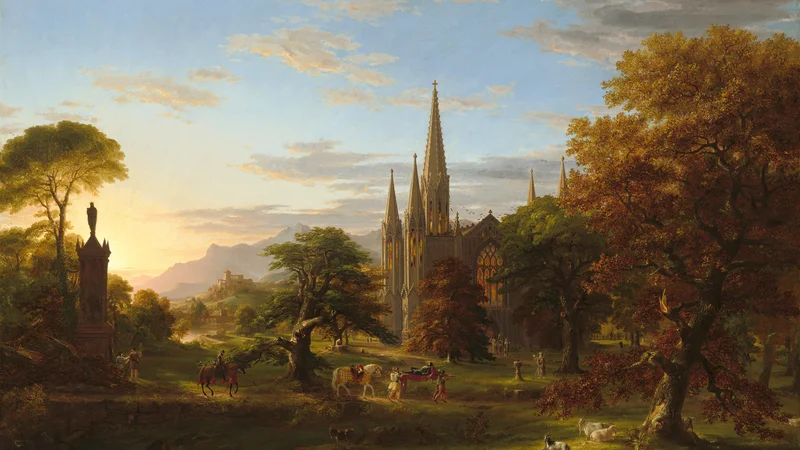
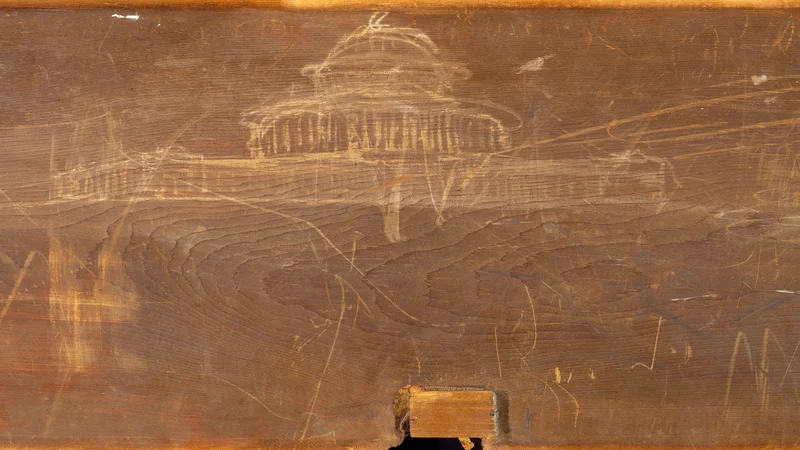
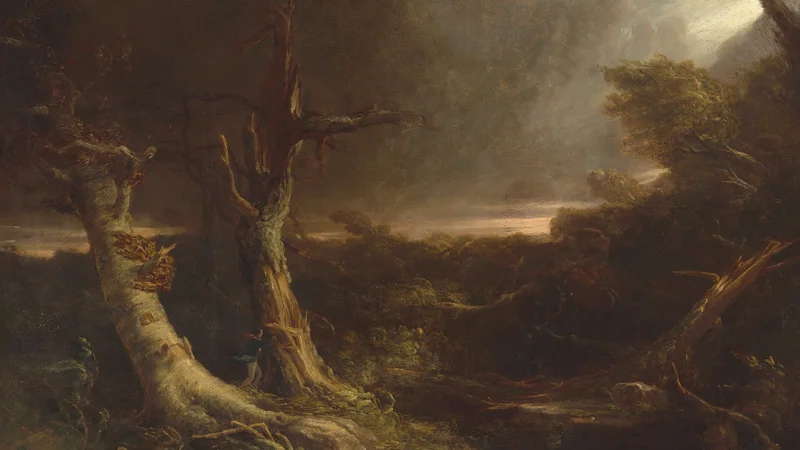
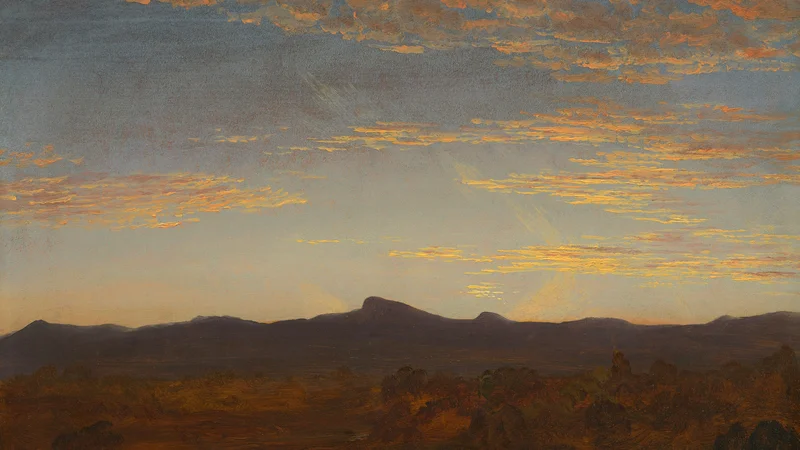
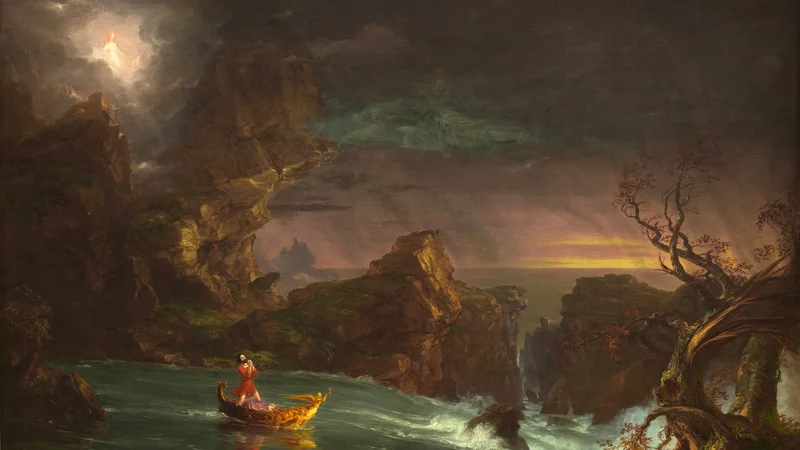
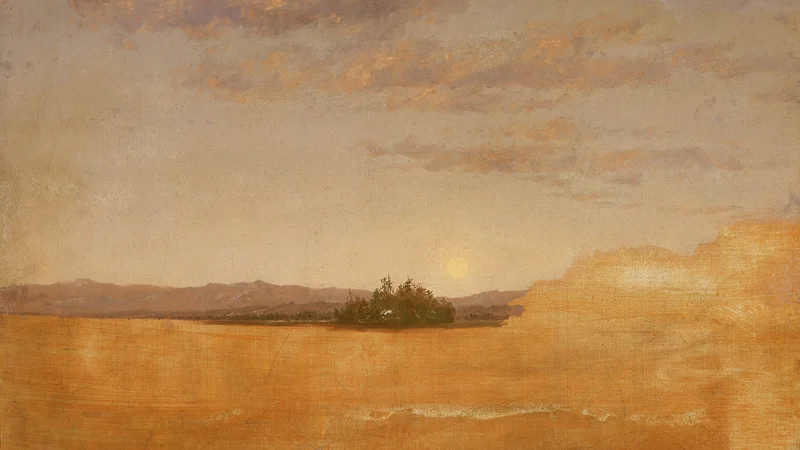
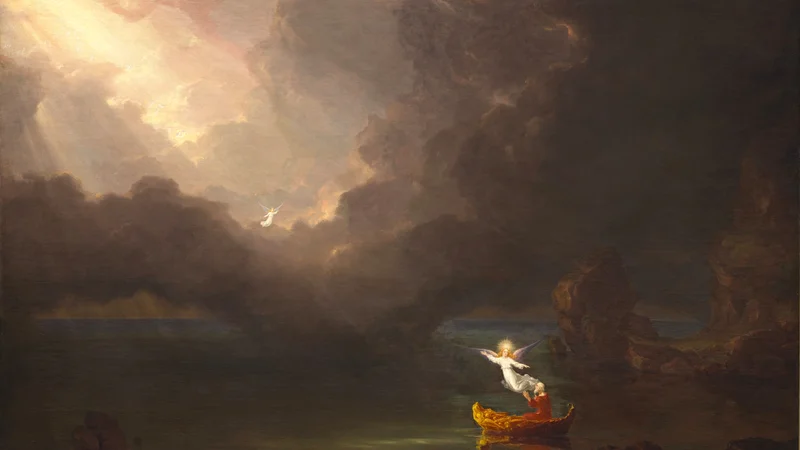
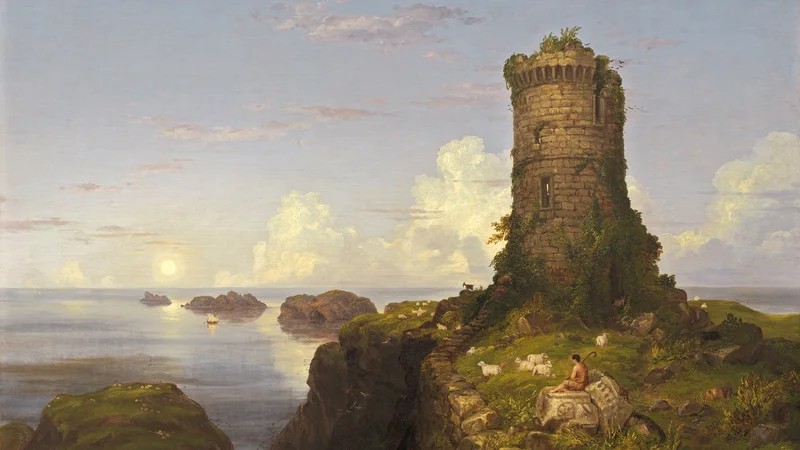
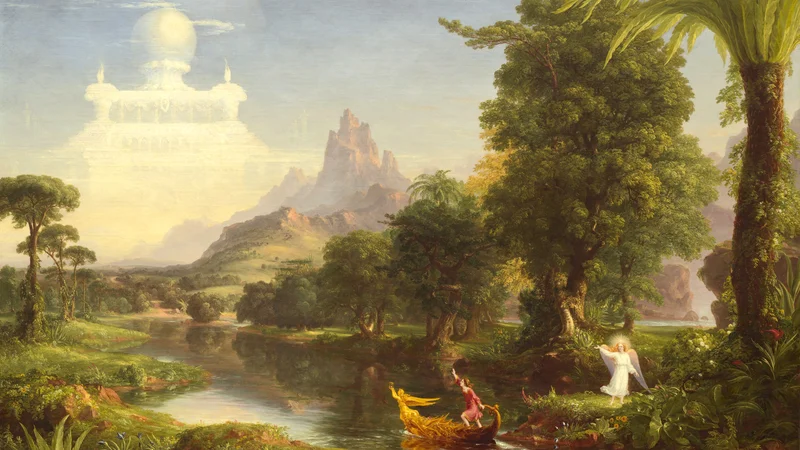
Cole’s practice was characterized by a meticulous observation of nature paired with an imaginative, often allegorical, approach to composition. His technical dexterity is evident in the precise draftsmanship of Study for "Catskill Creek" and the atmospheric depth of Landscape Sketch. Throughout his active periods, notably between 1827 and 1830 and again in the late 1830s, he explored the intersection of human ambition and the natural world, as seen in the contemplative The Voyage of Life: Manhood and the evocative Romantic Landscape with Ruined Tower. His versatility extended beyond traditional canvas work, as demonstrated by his architectural efforts in the Sketch for Ohio State Capitol Design and the evocative narrative capacity of The Return.
As a central proponent of Romanticism in America, Cole fundamentally shifted the aesthetic focus of the era toward the sublime. By imbuing the vast, untamed landscape with historical weight and philosophical inquiry, he established a precedent for American painting that emphasized the psychological and nationalistic significance of the environment. His enduring legacy lies in his ability to reconcile the wild reality of the American frontier with the refined European traditions of landscape painting, effectively elevating the genre to the status of history painting.