László Moholy-Nagy
8 artworks
László Moholy-Nagy (1895–1946) was a Hungarian-born polymath and a seminal figure of the Bauhaus movement. Active throughout the 1920s, he emerged from a background in law before pivoting to painting and photography, eventually becoming one of the most influential proponents of Constructivism. His work is defined by a rigorous intellectual engagement with the properties of light, transparency, and geometric precision, positioning him as a central architect of modern visual culture during his tenure at the Weimar Bauhaus.
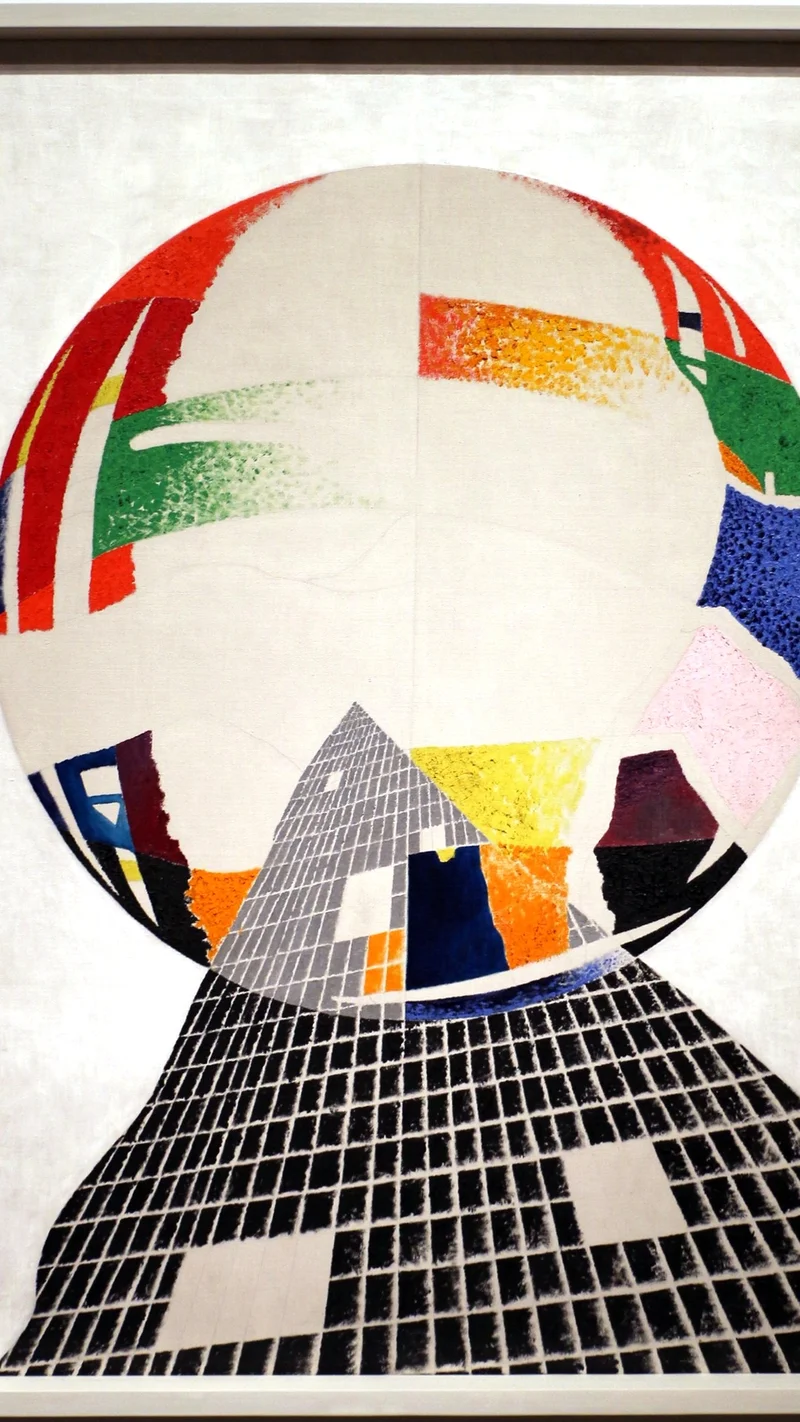
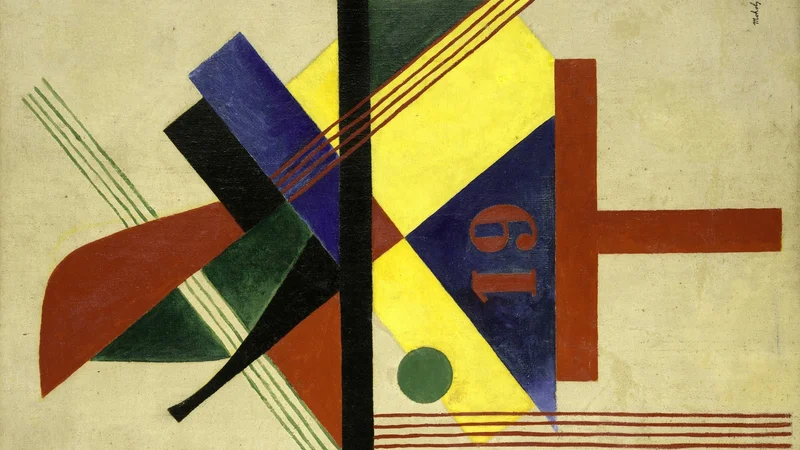
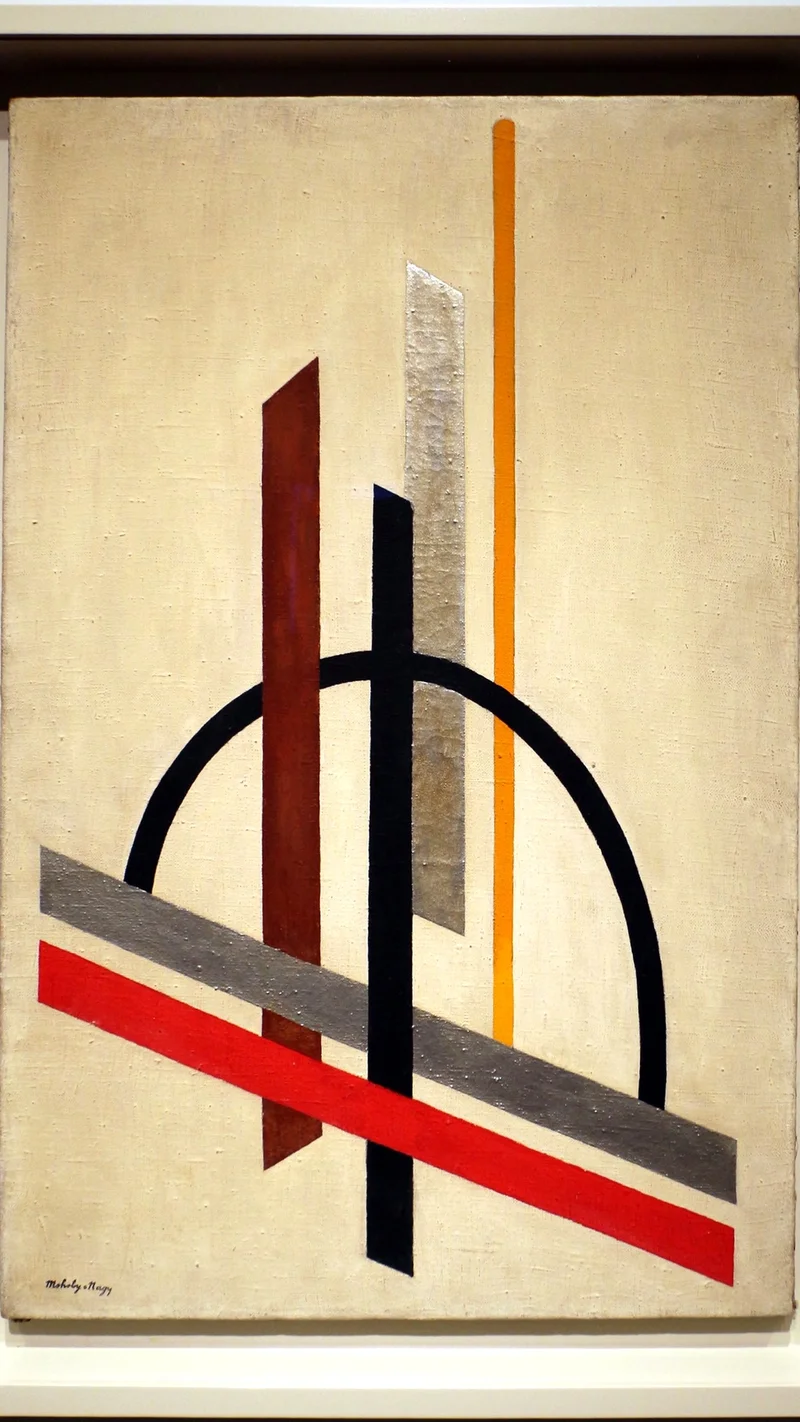
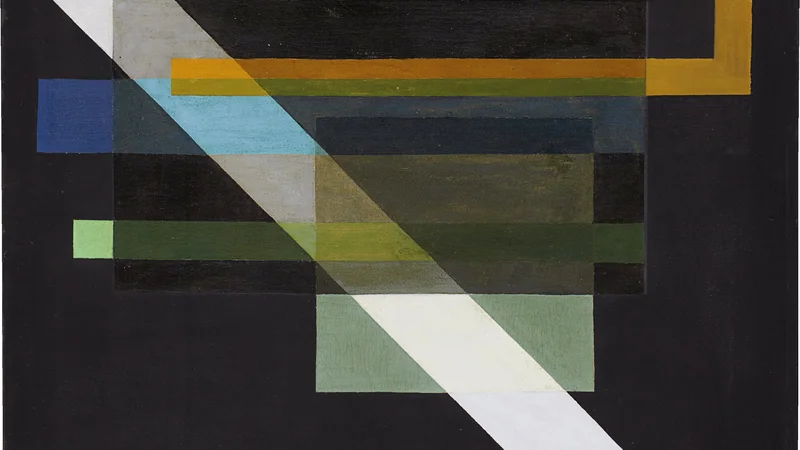
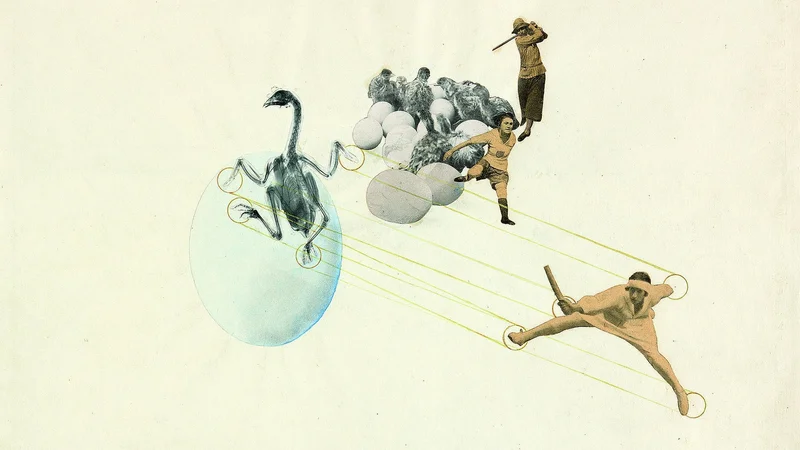
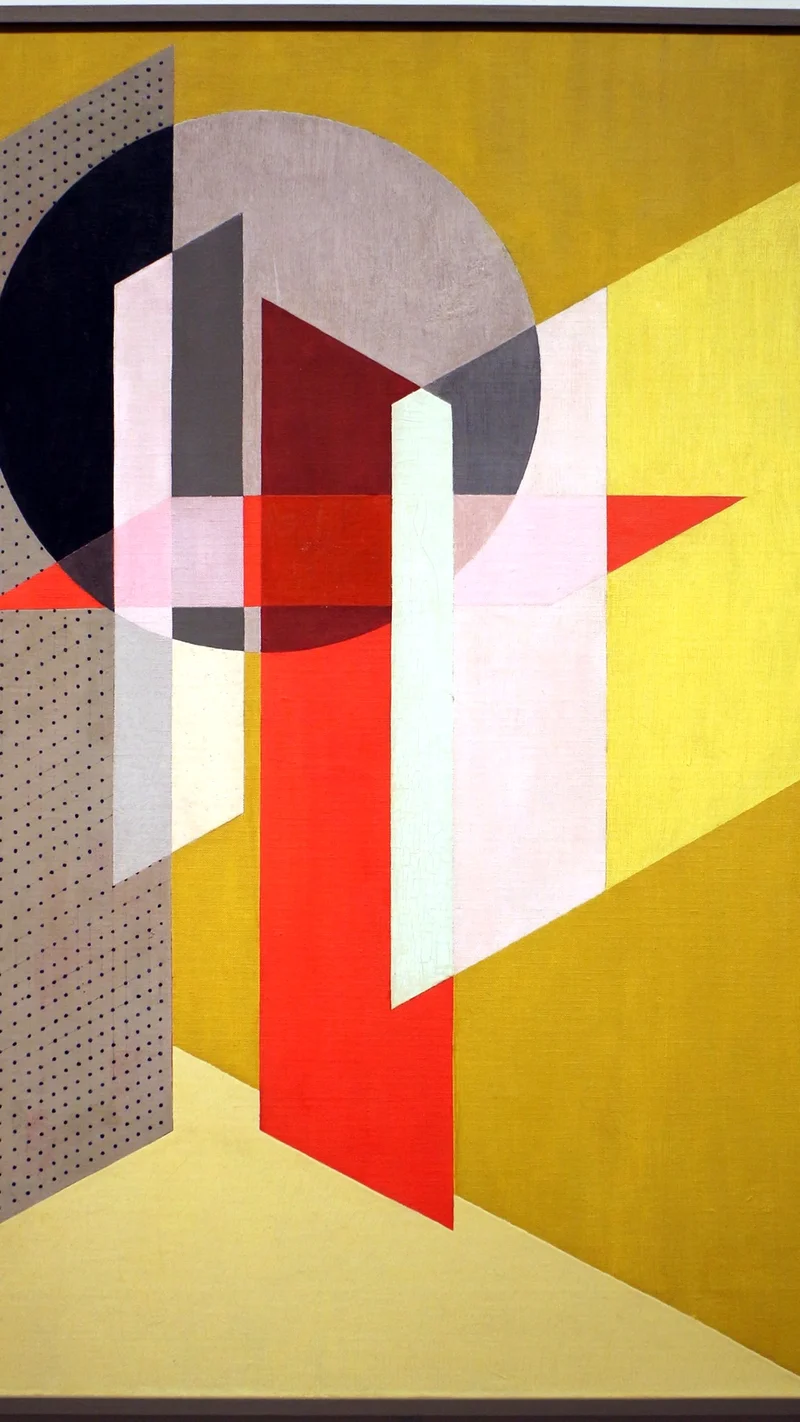
His artistic practice relied upon a structured exploration of space and industrial materiality. In works such as 19, 1921, and Construction, Moholy-Nagy utilized an austere vocabulary of lines and planes to examine the kinetic potential of the canvas. This exploration extended into his more complex compositions, including Once a Chicken, Always a Chicken, A 19, and Nuclear I, where he experimented with non-representational forms and the optical interplay of light. Through these pieces, he effectively challenged traditional notions of pictorial depth, favoring a rhythmic arrangement of elements that prioritizes structural integrity over mimesis.
Moholy-Nagy’s historical importance lies in his systematic approach to the integration of technology and art. By elevating photography and kinetic sculpture to the status of fine art, he fundamentally altered the trajectory of 20th-century aesthetics. His commitment to the synthesis of form and function continues to inform contemporary understandings of abstract design, establishing a legacy of formal experimentation that remains a cornerstone of institutional art history.