Armand Guillaumin
40 artworks
Armand Guillaumin (1841–1927) was a French painter and lithographer who occupied a steadfast position within the circle of Impressionism. After studying at the Académie Suisse in the early 1860s, where he formed lasting friendships with Paul Cézanne and Camille Pissarro, Guillaumin emerged as an essential participant in the movement, exhibiting in several of the historic Impressionist exhibitions. His career was defined by a sustained dedication to the plein-air tradition, balanced against the demands of his employment with the Paris municipal department, which allowed him to pursue his artistic vision with singular autonomy.
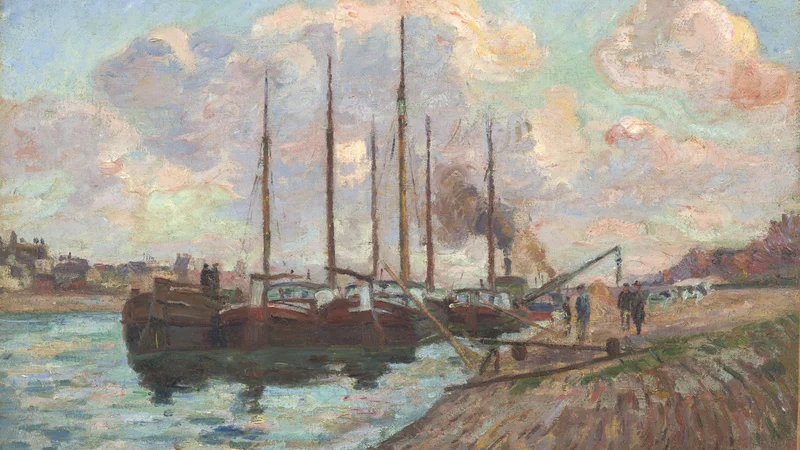
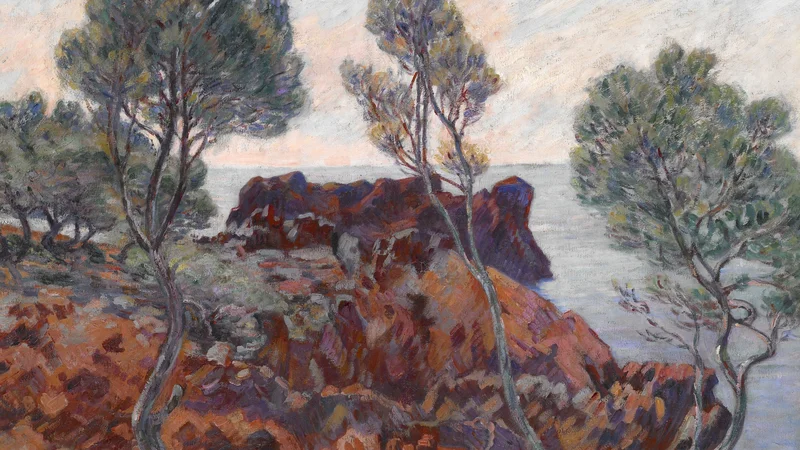
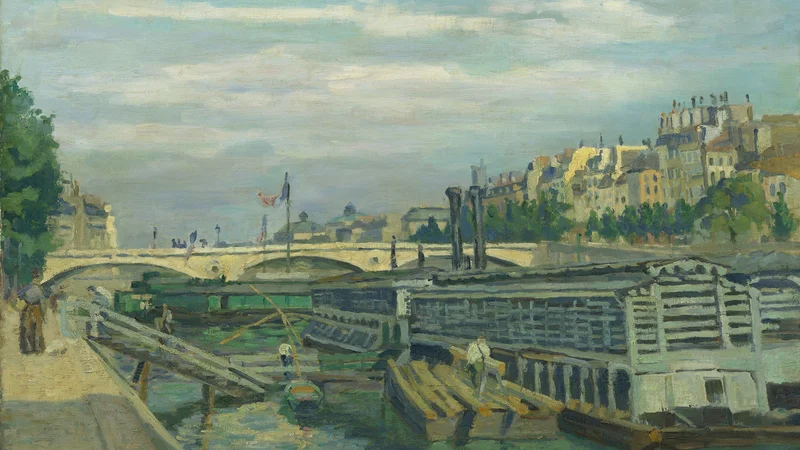
Guillaumin’s technique is characterized by a vigorous, often experimental application of paint and an increasingly bold, non-naturalistic color palette that anticipated the development of Fauvism. His mastery of light and atmosphere is evident in works such as The Quai d'Austerlitz and the evocative Bords de Seine, where he captured the shifting topography of the Parisian outskirts with rhythmic, textured brushwork. In his later travels to the Mediterranean, Guillaumin explored the vibrant chromatic possibilities of the landscape in Agay, Mont Vinaigre, and Au Brusc. His versatility is further demonstrated in works like Cart in a Narrow Street (Arcueil), which reveals his rigorous attention to structural form and the interplay of shadow and light, solidifying his legacy as a vital bridge between the foundational tenets of Impressionism and the modernist explorations of the early 20th century.