The Child Carburetor
About this artwork
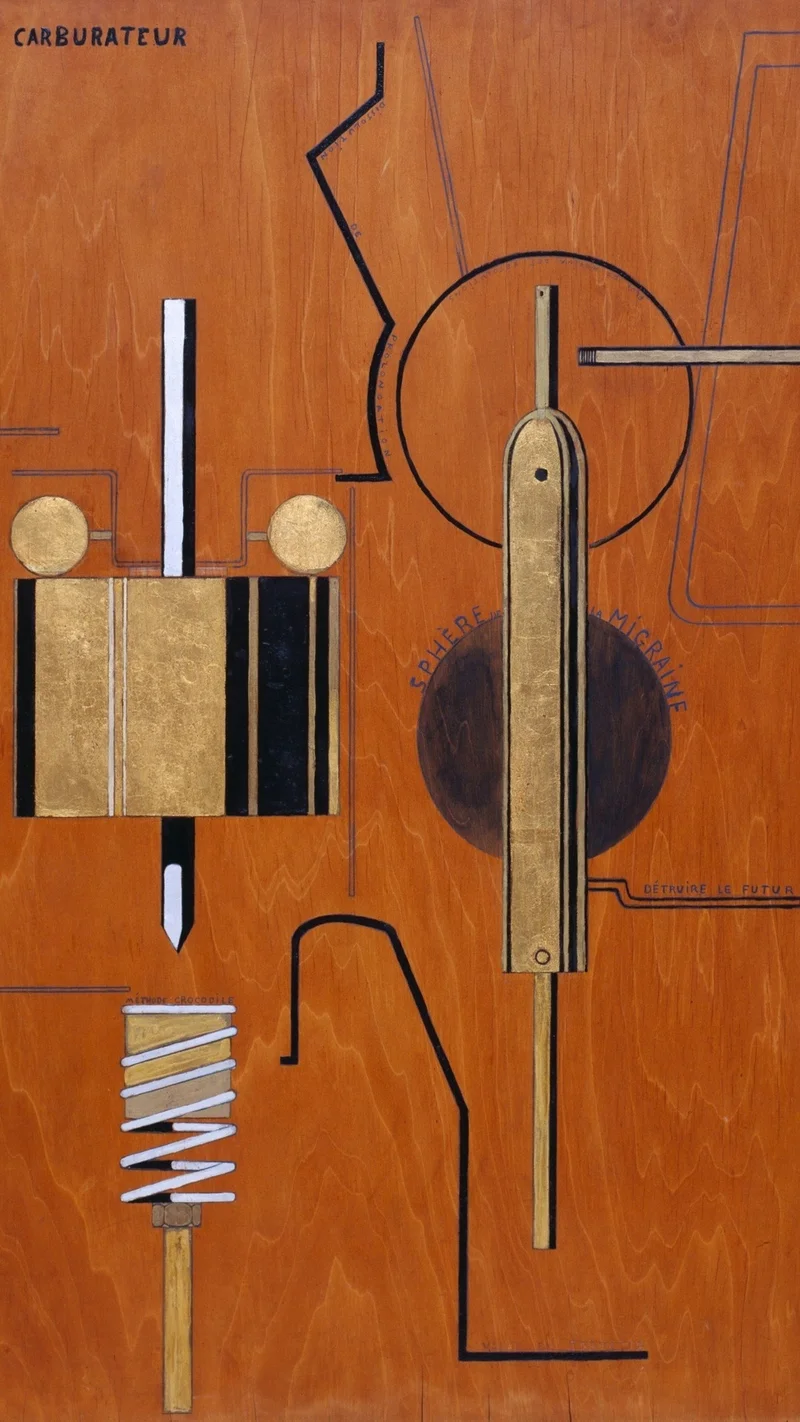
Francis Picabia's "The Child Carburetor" is painted with oil and metallic paint on a wooden panel, incorporating text and abstract, machine-like forms. It reflects the artist's engagement with mechanical aesthetics during his Dada period.
Did you know?
Francis Picabia was a central figure in the Dada movement, known for his "mechanomorphic" paintings like "The Child Carburetor." These works often depicted human emotions or relationships using machine parts, challenging traditional portraiture and reflecting a cynical view of humanity's increasingly industrialized and dehumanized existence after World War I. The inclusion of text like "CARBURATEUR" (carburetor) further emphasizes the mechanical metaphor, while other phrases like "SPHERE MIGRANE" (migraine sphere) and "DÉTRUIRE LE FUTUR" (destroy the future) add layers of personal and societal commentary typical of Dada's anti-establishment spirit.

Know the artwork. Knowing its title and artist turns a beautiful image into a story worth sharing — with a museum label:
The Child Carburetor
Francis Picabia, 1919
On your wall. Unlock the HD download and keep this piece in your Vault — forever.